
The ancient Venetians had a rather ambiguous relationship with prostitution. It was both rejected and accepted.
Prostitution was rejected because it was seen as immoral and dishonest.
However, it was also accepted because the alternative was perceived to be sodomy, which is a mortal sin.
At the same time, the courtesans of Venice in the 1500s and 1600s were famous and celebrated. Important people came from all over Europe to enjoy their company. Kings, dukes and even cardinals requested the services of the most famous courtesans.
This ambiguity is evident in the following four prints.
They’re from the same publication, the Habiti delle Donne Venetiane, published around 1610 by Giacomo Franco.
A famous courtesan
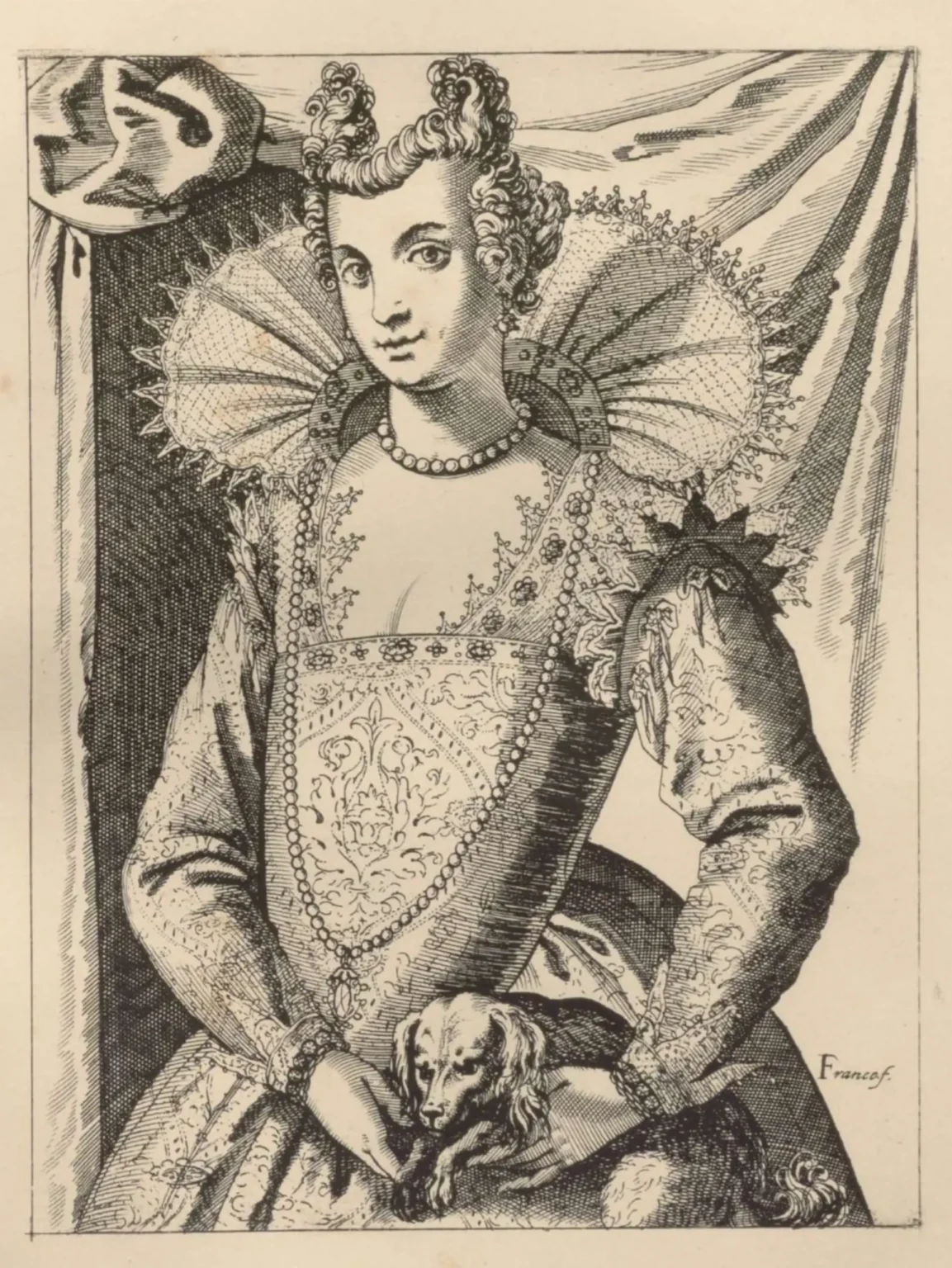
Beyond the four types of women; that is, Noblewomen, and the wives of Citizens, Merchants, & Craftsmen, there are also Courtesans, or we may say prostitutes of some wealth; who dress very superbly as they please, except that they are not allowed to go to sacred places unless they go with their face covered; except, however, if they were travelling by gondola; otherwise they fall under the penalties of the law. The present figure is of a Courtesan, or famous prostitute, who usually keeps small dogs of French breed, and in lasciviousness surpasses any other woman.
Courtesan dressed for winter
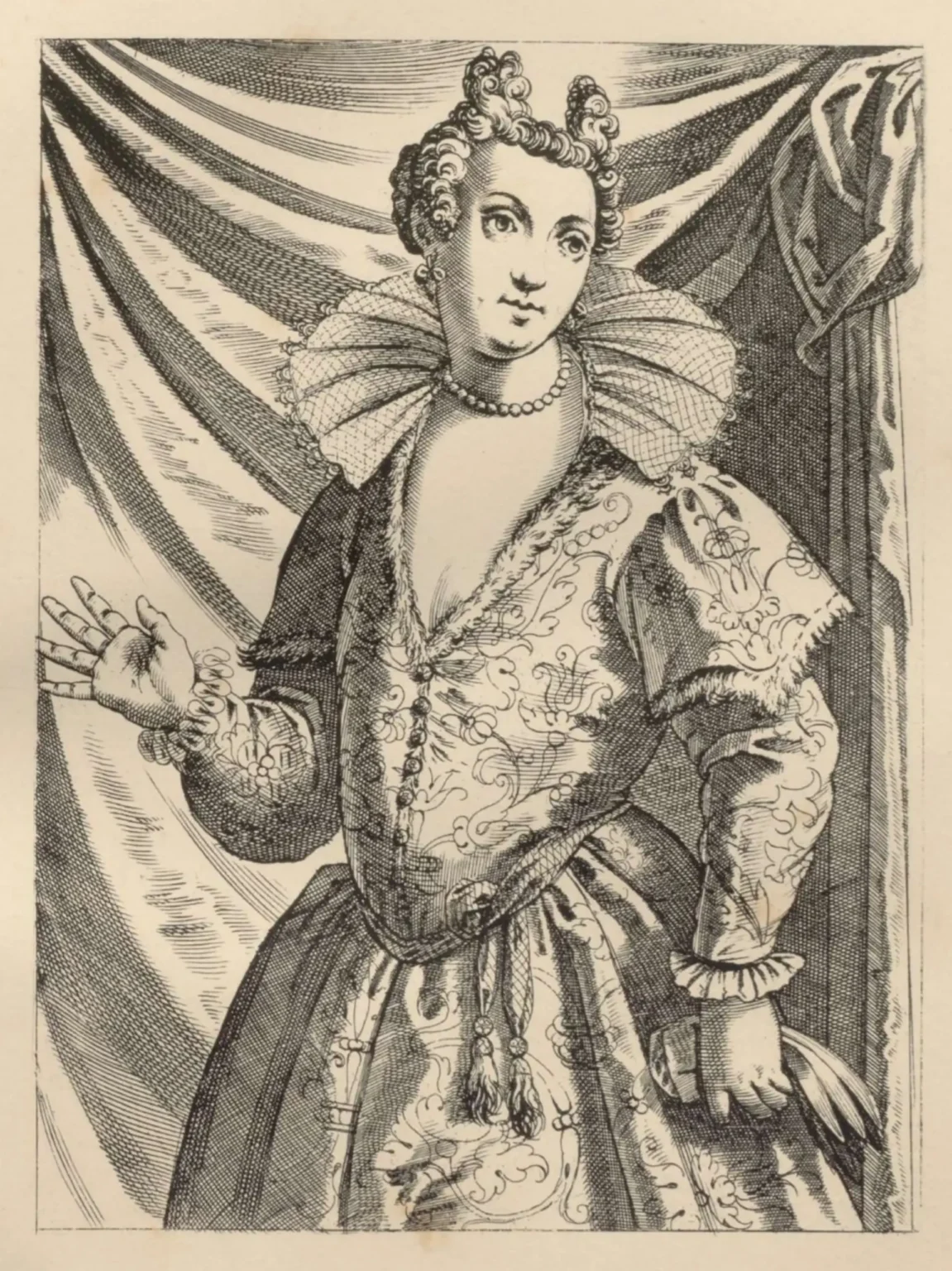
There is no shortage of various smooth fabrics, nor of habits with many ornaments for the prostitutes and dishonourable ladies of this city, who according to the seasons are accustomed to wearing different outfits.
This is a wealthy courtesan, dressed for winter with a garment lined with beautiful furs of great value; thus adorned and charming, she spreads the nets of lust to catch the unsuspecting young men, who hastily fall into the treacherous snares of love.
Running with bulls
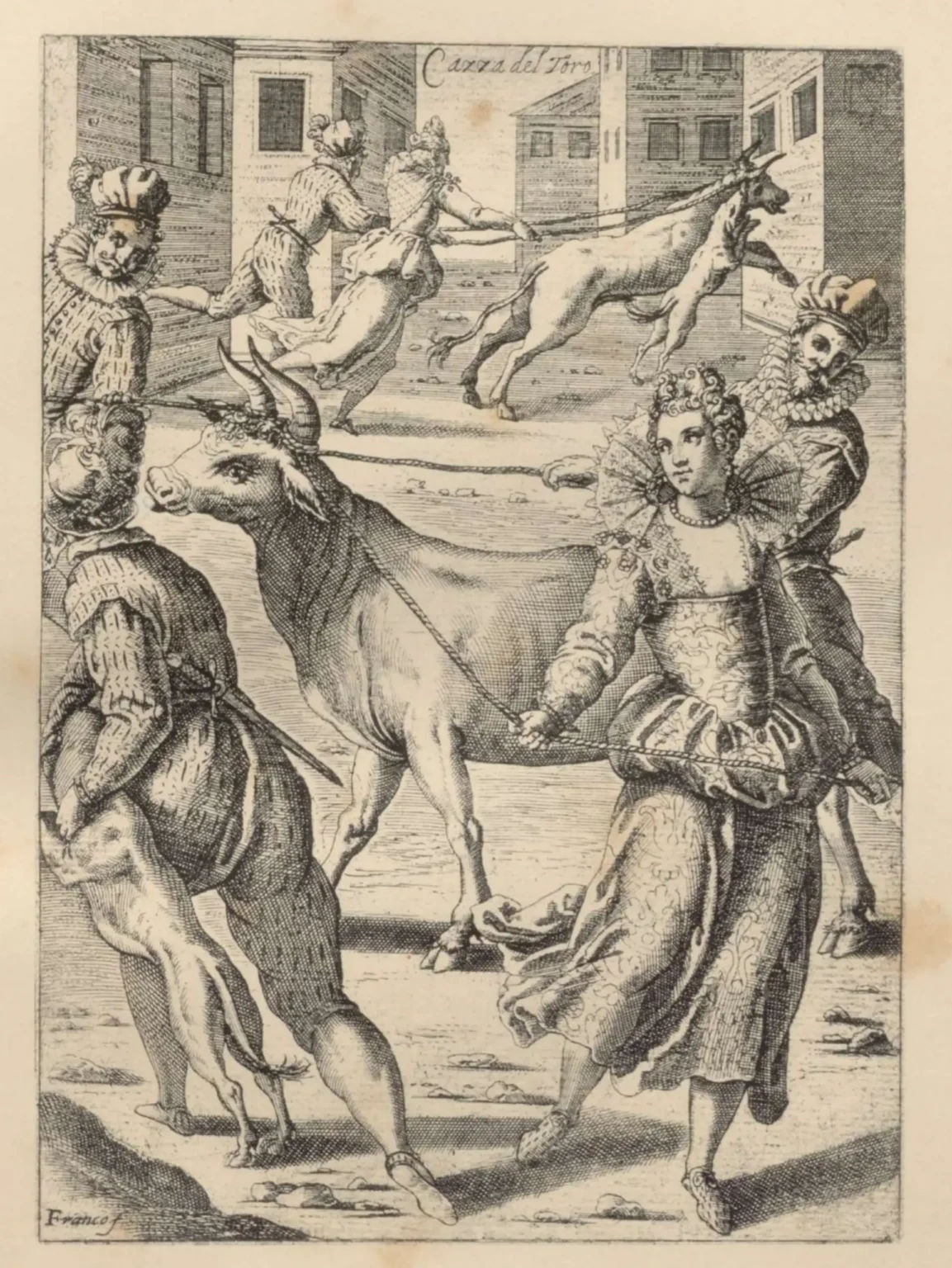
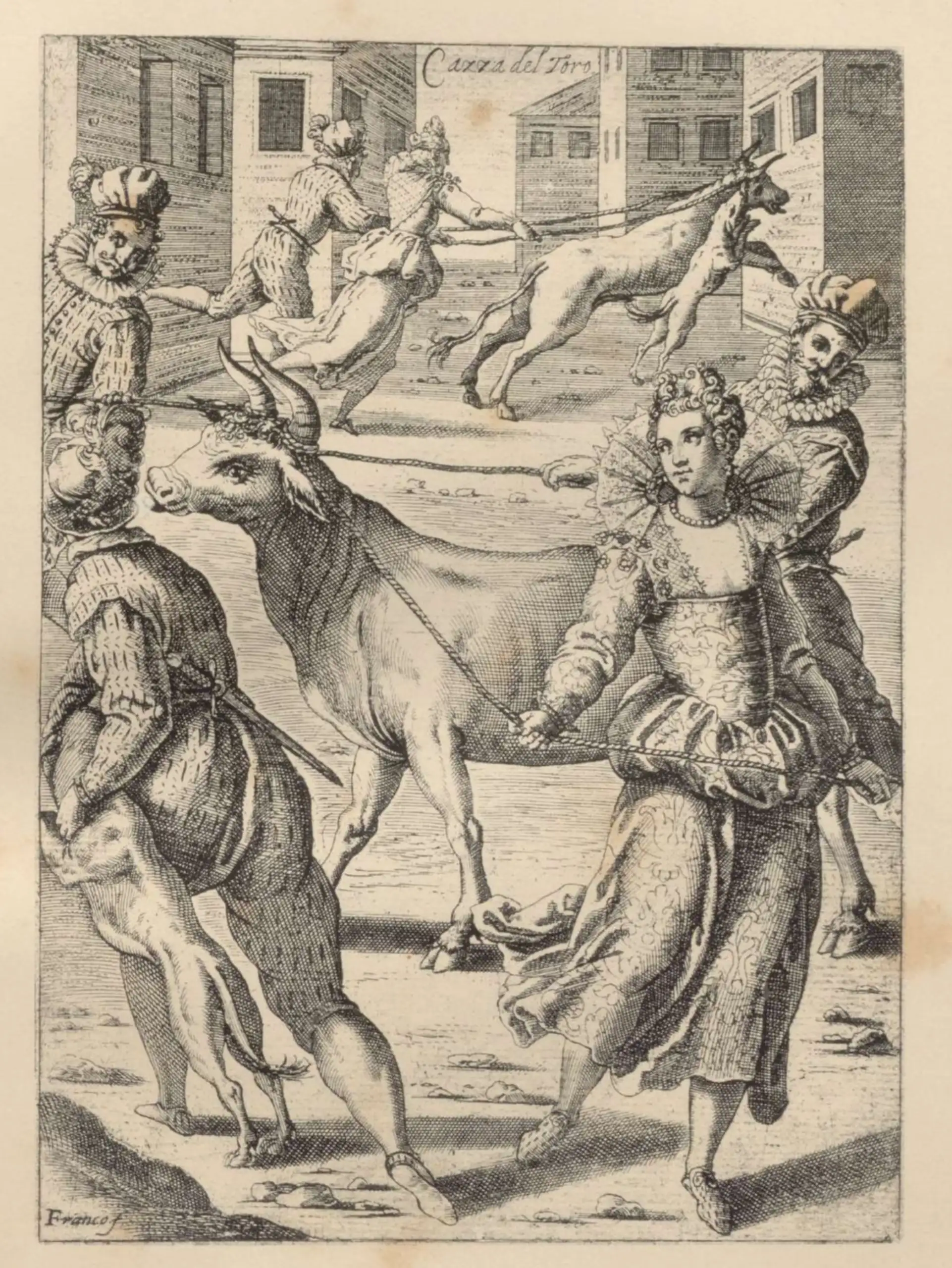
It is customary in the noble City of Venice to hold a festival on the day of Fat Thursday, in St. Mark’s Square, for the recreation of the people; to which the Most Serene Prince and the illustrious Signoria attend, and the young men usually run with the bulls through the City, to amuse themselves with such pastimes and give pleasure to others; and because not only men are accustomed to running, but also some courtesans.
Therefore, we have placed this figure of good design, in which two women are represented running gracefully.
Courtesan dressed as a foreigner
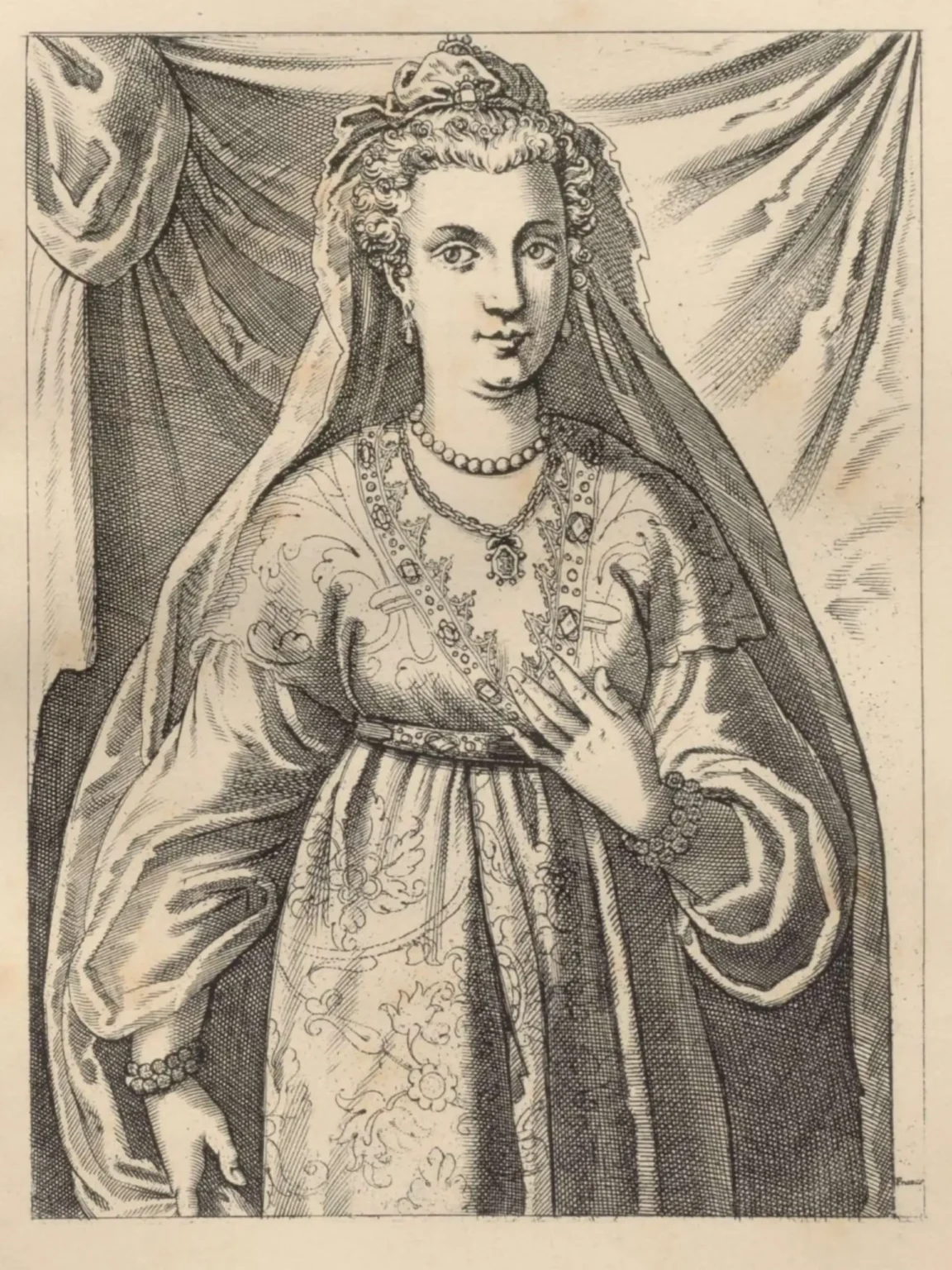
I believe that if Apelles were to return from death to life, he would not be able to create a habit that showed greater lasciviousness than this design, which is of a Lady, who with venereal majesty steals the hearts of men, and inexperienced youngsters, who then, guided by unrestrained amorous desire, enter the deceptive and intricate labyrinth. This Lady usually dresses attractively, to make herself pleasing in various ways to those who look at her.
Appeles was an ancient Greek painter, none of whose works have survived. He was, however, known from Roman literary sources, and in the 1500s, copies of paintings attributed to him were found in Herculaneum.
The ambiguity is evident in these prints and their captions. The courtesans were admired and despised at the same time. They were beautiful and desirable, and led young innocent men into a life of sin.
Interestingly, they were also freer than the ‘honest’ women, who were bound by a million rules and restrictions on their behaviour, as the bull run print shows.
The book
The book was published in around 1610, but it is undated. However, it is clearly associated with the larger and more ambitious Habiti d’huomeni et donne venetiane, from 1610. The dedication gives the impression that the prints were works remaining from the other book, published on the request of a friend, and probably in few copies.
In fact, the 1610 edition only seems to exist in a few copies. The National Italian Library service only list three copies in Italian collections, none of which are digitised.
The usual sources for digitised books also came up empty, but recently, by chance, I stumbled over a good digitised copy of a later reprint from the Museo del Prado in Madrid.
Links
- Habiti delle Donne Venetiane (c.1610) — Giacomo Franco
- Digitised copy from the Museo del Prado.
Leave a Reply