
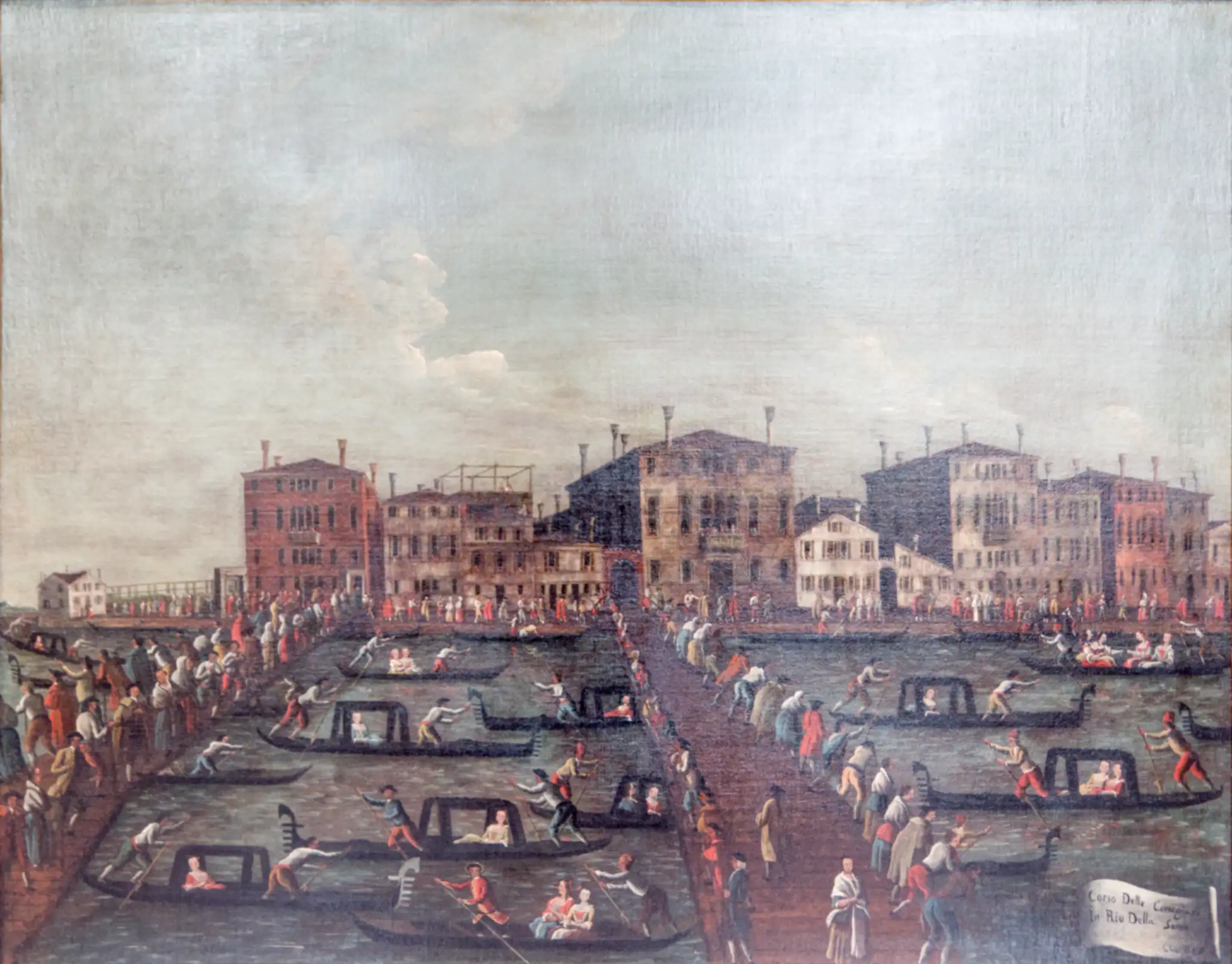
Venice in the 1700s had its fair share of great and famous painters, but just as in any other craft or art, only a few became famous.
There were painters, even in the 1700s, of whom we don’t even know the names, and many, of whom we know little more than their name.
Gabriel Bella is such an almost unknown artist. Besides the almost seventy paintings he signed, we only have a few data points for his entire life.
Any regular visitor to Venice, or even just someone interested, have probably seen some of his works, as they’re used and reused continuously.
In fact, the posters for the carnival, which are all over the city at this time, use one of his paintings of the Venetian celebration of Giovedì grasso, which included the noted beheading of a bull.
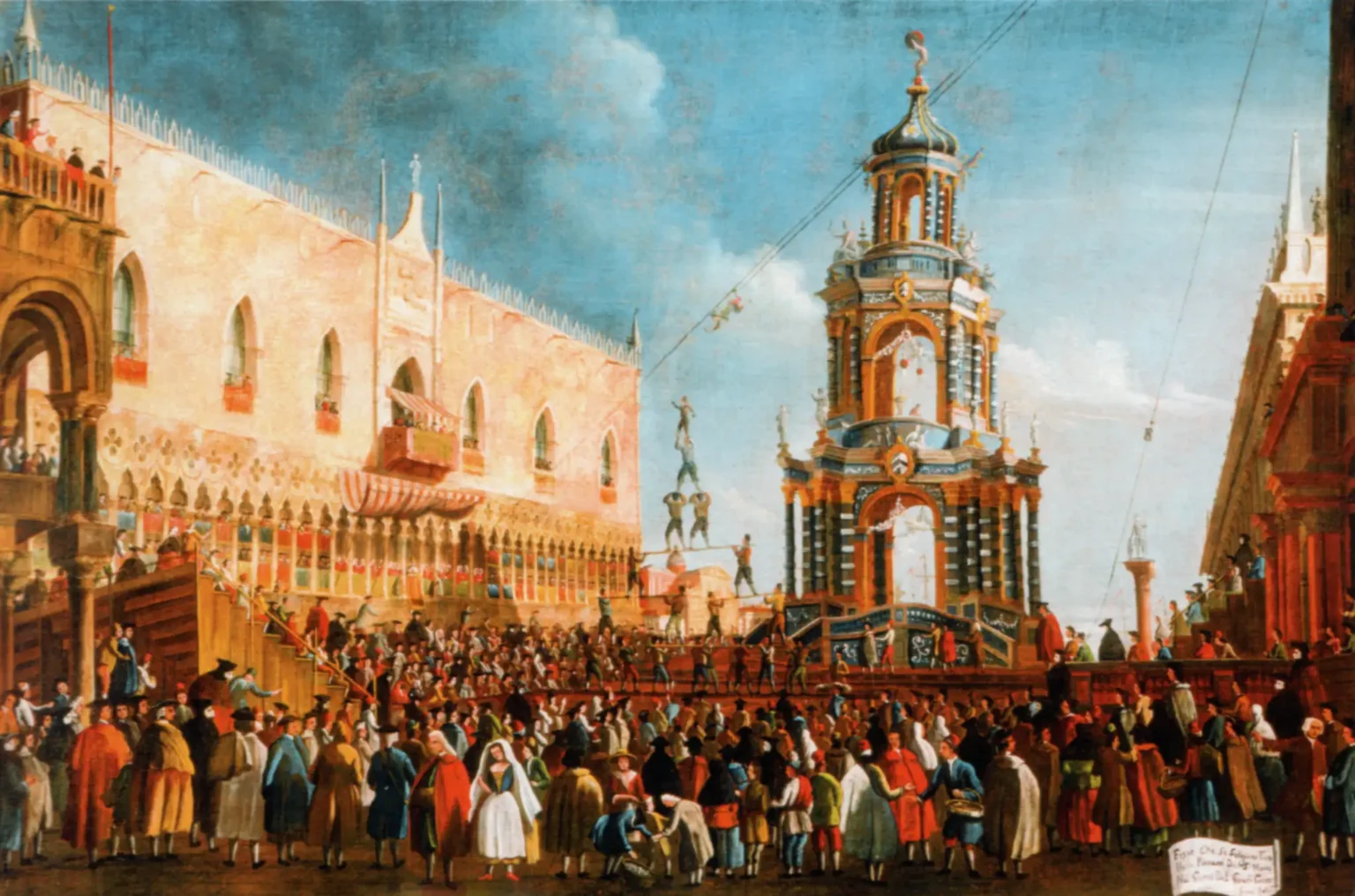
That painting is a copy of a Francesco Guardi, who is one of the great Venetian artists. There are a few differences, and the work used is that of Gabriel Bella.
Who was Gabriel Bella?
So, what do we know about the person Gabriel Bella?
The list of known facts about him is short. In 1760, he was a member of the fraglia (guild) of Venetian painters. In 1763, a daughter was baptised, and a representative of the Venetian nobleman Lorenzo Giustinian was one of the witnesses. He was in Treviso in 1782, working on a commission by the Querini family, for their villa there.
That’s it. That’s the document trail his life has left.
Then there are his paintings.
His entire production, at least what has survived and is attributed to him, are 67 large oil paintings in the collection of the Fondazione Querini-Stampalia in Venice.
Everything, which we are certain is from his hand, is in one single collection, where it has been since the late 1700s. Sometimes, a work attributed to him appears at some auction, but there’s never any signature, and the attribution is normally entirely on stylistic reasons.
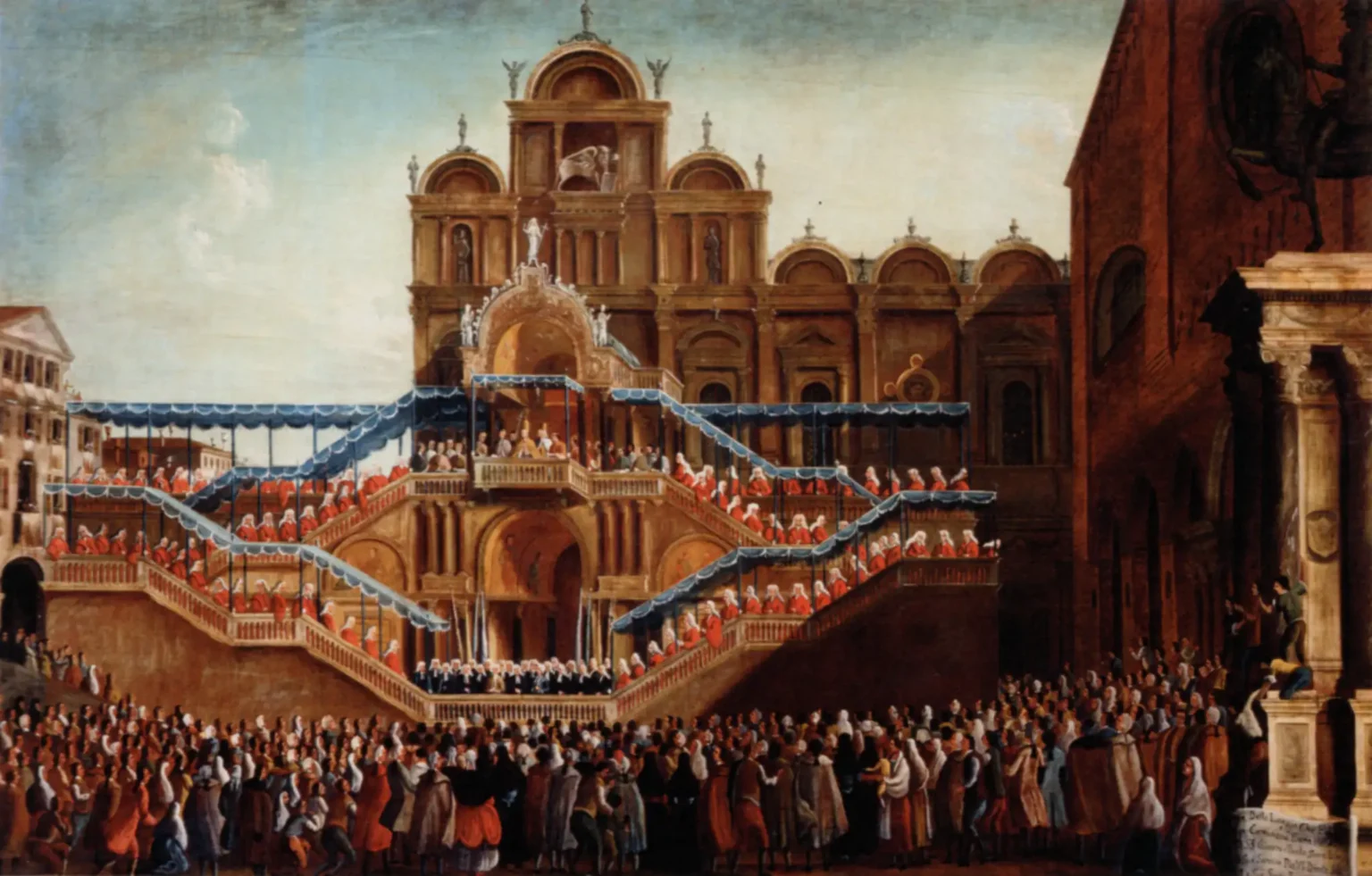
Very few of the paintings are actually dated, but one depicts the visit of the King of Poland in 1740, and another the visit of a Pope to Venice in 1782. That is most likely the span of the working life of Gabriel Bella, but we don’t know when and where he was born, or when he died.
A house painter
It was not unusual for wealthy Venetian families to have house painters, who worked almost exclusively for one family, or for a few interrelated families.
For a painter, who didn’t fall in the “great artist” category, the patronage of a wealthy family was a good way of making a living. The presence of a representative of the Giustinian family at the baptism of Bella’s daughter attests to such a relationship between the painter and the Giustinian.
We know that in the 1780s, Bella worked for the Querini in their villa in Treviso. The two branches of the two families were close.
When the Venetian nobleman Girolamo Ascanio Giustinian died in 1791, his villa in Treviso passed to a Querini. An inventory from the villa, drawn up in 1795, lists 95 assorted paintings of events and scenes from Venice.
It is likely that the paintings by Gabriel Bella were among these, as they’re all depict events and scenes from Venice.
The paintings were moved to the Querini villa in Treviso, and then to Venice after the fall of the republic in 1797. An inventory of the Querini-Stampalia palace in Venice, from 1844, lists the 67 paintings by Bella as having come from their villa in Treviso.
Gabriel Bella was therefore probably a house painter of first the Giustinian and then the Querini for much of his life. He worked for them, the paintings adorned their countryside villas, and then came to Venice as a single collection.
That also explains why there are few, if any, works of Gabriel Bella outside the Querini-Stampalia collection.
Why are the paintings interesting?
Gabriel Bella was an able craftsman, but he was not a great artist. He was not a Guardi or a Canaletto. It is not necessary to have studied art to see that.
The purpose of the paintings was to hang on the walls of the villa or palace of a Venetian noble family, and impress on their visitors the grandeur and splendour of the Republic of Venice, of which that same family was a part of the ruling elite.
The paintings were made to depict the Republic of Venice, in a way which was both recognisable and flattering, and Gabriel Bella was very adept at that.
In several cases, he produced copies of the works of other artists, or copied compositions from popular prints.
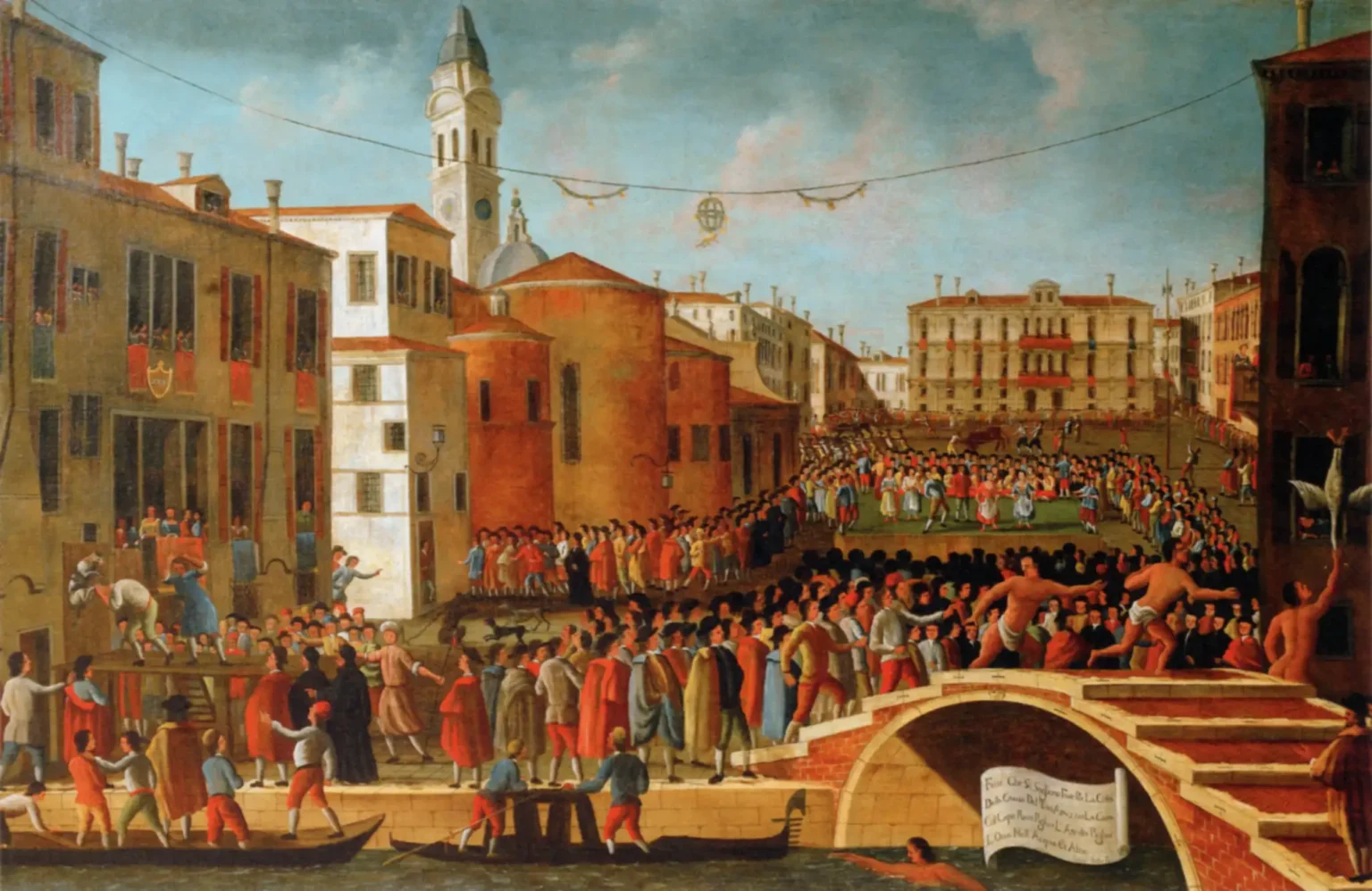
His paintings are wide views of public spaces, in which important events take place. There are usually many individuals, but they’re small and form an element of the entire scene.
There are ceremonial scenes from the republic, the election and crowning of doges, the meetings of the important institutions of the republic, all the major celebrations and events of the state.
Social and religious events abound, including processions, feasts, regattas, bull-fights in the squares, and what not.
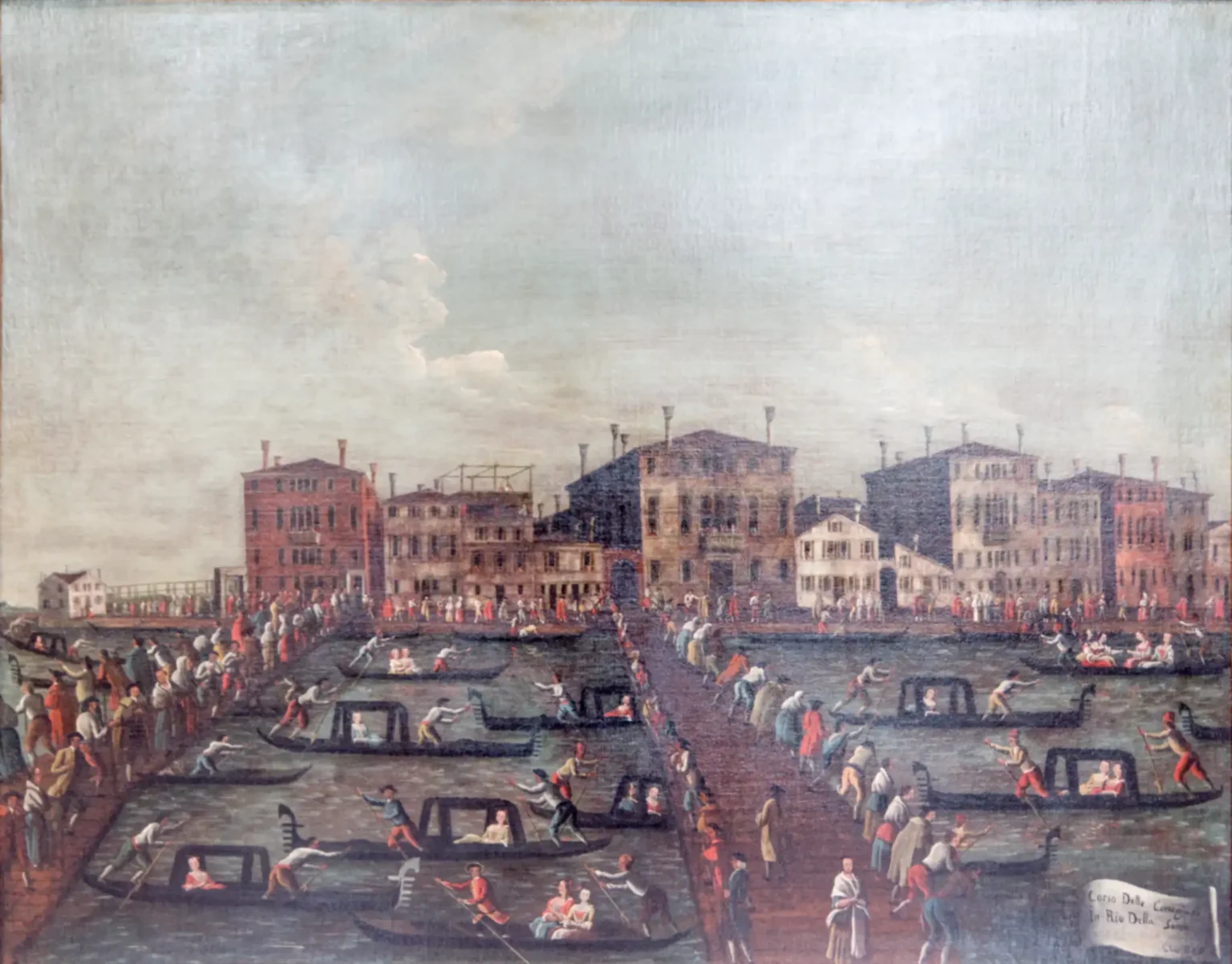
The large number of paintings, and the fact that they’re still together (which is unusual in itself), gives a good impression of how the Venetian nobility of the 1700s perceived themselves.
The collection forms a kind of self-portrait of how elite Venice saw itself and how it wanted to be seen.
The foundation
All these paintings were in a private palace in a private collection, until 1869.
The last member of the Querini-Stampalia family died in 1868, and he left everything to a cultural and educational foundation, the Fondazione Querini-Stampalia which is housed in the family palaces on the Campo Santa Maria Formosa.
Usually, the museum of the Fondazione Querini-Stampalia only have about half the paintings on display, in a rather limited space, as they have a considerable art collection.
Currently, the foundation has put the entire collection on display, as a special exhibit, until April 12th.
- Querini Stampalia Foundation
- Exhibition: Bella la vita a Venezia
- Gabriel Bella, an unknown painter — on History Walks Venice
Leave a Reply