
Easter is the most important event in the Christian calendar, and that was no different in the times of the Republic of Venice.
It should therefore be no surprise that several events took place during the week of Easter, and that all classes participated.
A couple of these events included a rather special relic, which is still in the treasury of the Basilica di San Marco.
It is a sample of the blood of Jesus.
Just to muddle the waters, there’s a similar relic in the Basilica di Santa Maria Gloriosa dei Frari.
Both of them originate in Constantinople.
The looting of Constantinople
The relic in the treasury of St Mark’s was sent back by Enrico Dandolo, the doge who led the Venetian forces on the Fourth Crusade in 1204. The Venetians had sacked numerous churches in Constantinople, and much of the loot was shipped back to Venice, including many important relics. The treasure of the Basilica di San Marco is full of objects looted in Constantinople in 1204.
The blood was said to originate from the Miracle of the Cross of Beirut, in the 700s. Jews of the city had attacked a church, and overturned the cross on the altar. When the cross fell to the ground and broke, blood and water exuded from it, causing the astonished Jews to convert to Christianity on the spot.
In Venice, many of the relics of 1204 were kept in a treasury in the basilica, which was promptly damaged by a fire in 1230. Only a few pieces miraculously survived destruction, including the crystal flacon with the blood of Christ. The crystal has a crack, which might be due to the fire.
The relic in the Frari, on the other hand, came to Venice in 1498, with Melchior Trevisan, who had commanded the Venetian navy in the east.
Supposedly, it came from ointment and blood on a sponge, which Mary Magdalene had used when they prepared the body of Jesus for burial.
Constantinople, as the imperial capital, had accumulated a large quantity of Christian relics, which at times, in various ways, found their way to Western Europe. This was also how Santa Lucia came to Venice.
Schools
The Venetian Scuole Grandi — the Great Schools — are well known. They were charities, which accumulated great wealth and built magnificent buildings for their meetings and offices, which still dominate the city.
There were other schools, often called minori, but some weren’t that minor.
The Scuola della Passione — the School of the Passion — was one such almost-great school. It was founded in the early 1500s, with the express purpose of organising the annual Easter celebration in Piazza San Marco on the night of Holy Thursday, when one of the two relics was carried in procession.
Francesco Sansovino, writing in 1581, described the Scuola della Passione like this:
Almost in imitation of these great ones [the six Scuole Grandi], but not, however, in the number of the six, although by no means smaller in the quantity of brothers, another school called of the Passion has arisen in these years, but different in habits and in insignia. They are seen once a year in procession, that is, on the night of Holy Thursday when the miraculous blood is shown to the other brotherhoods.
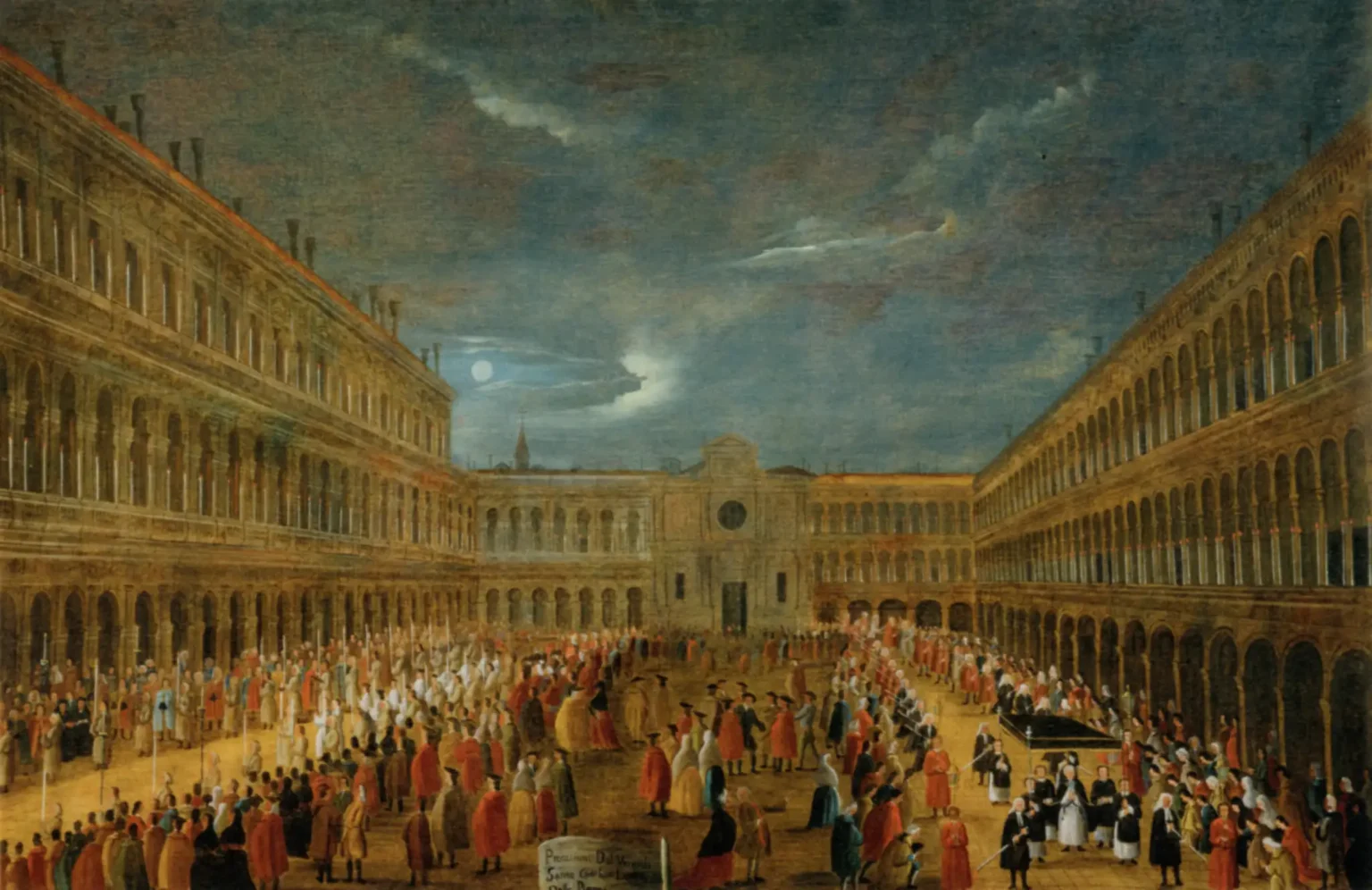
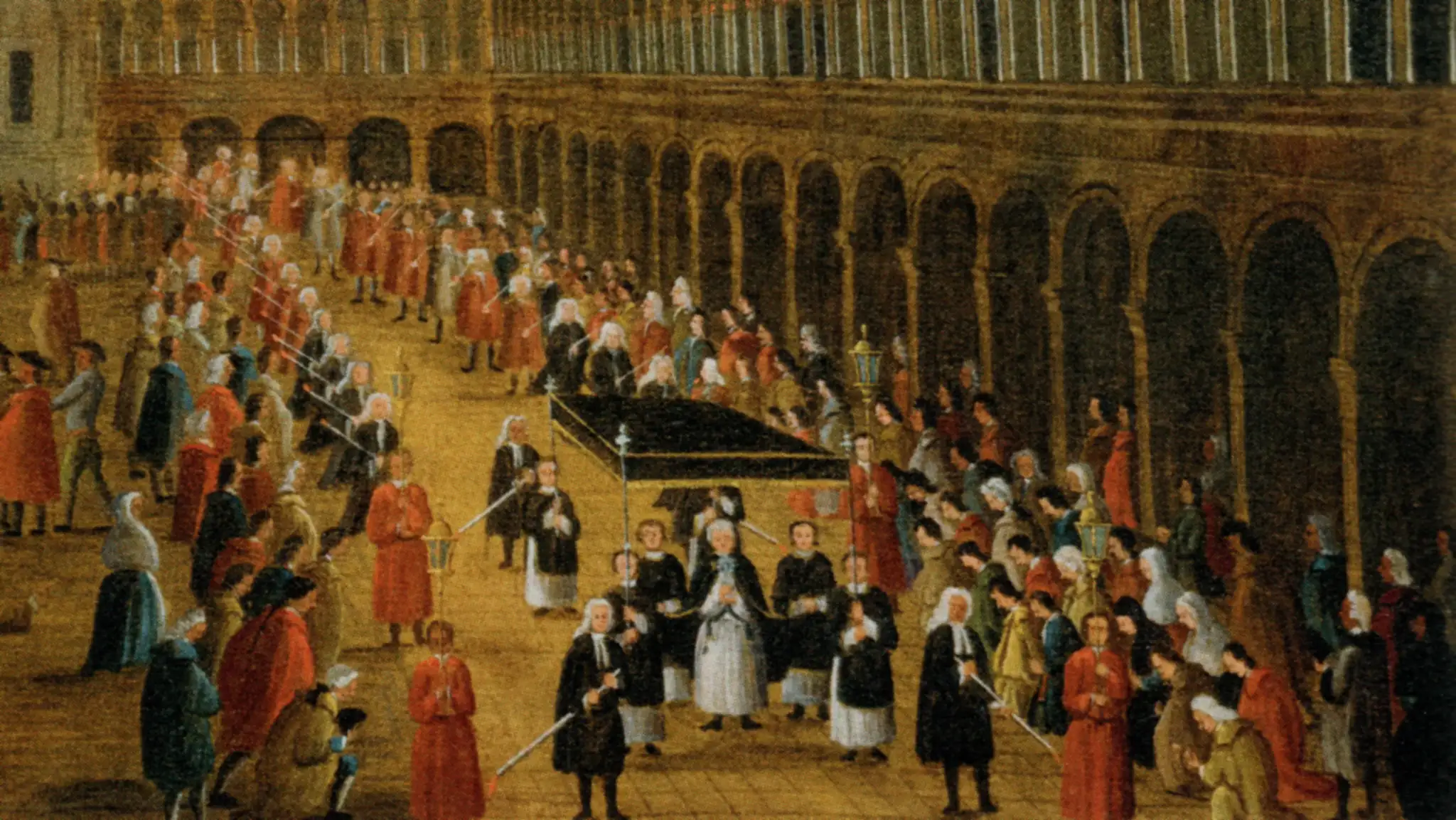
This painting, by Gabriel Bella, from the late 1700s, shows the night procession in Piazza San Marco, with the (now demolished) church of San Geminiano in the background.
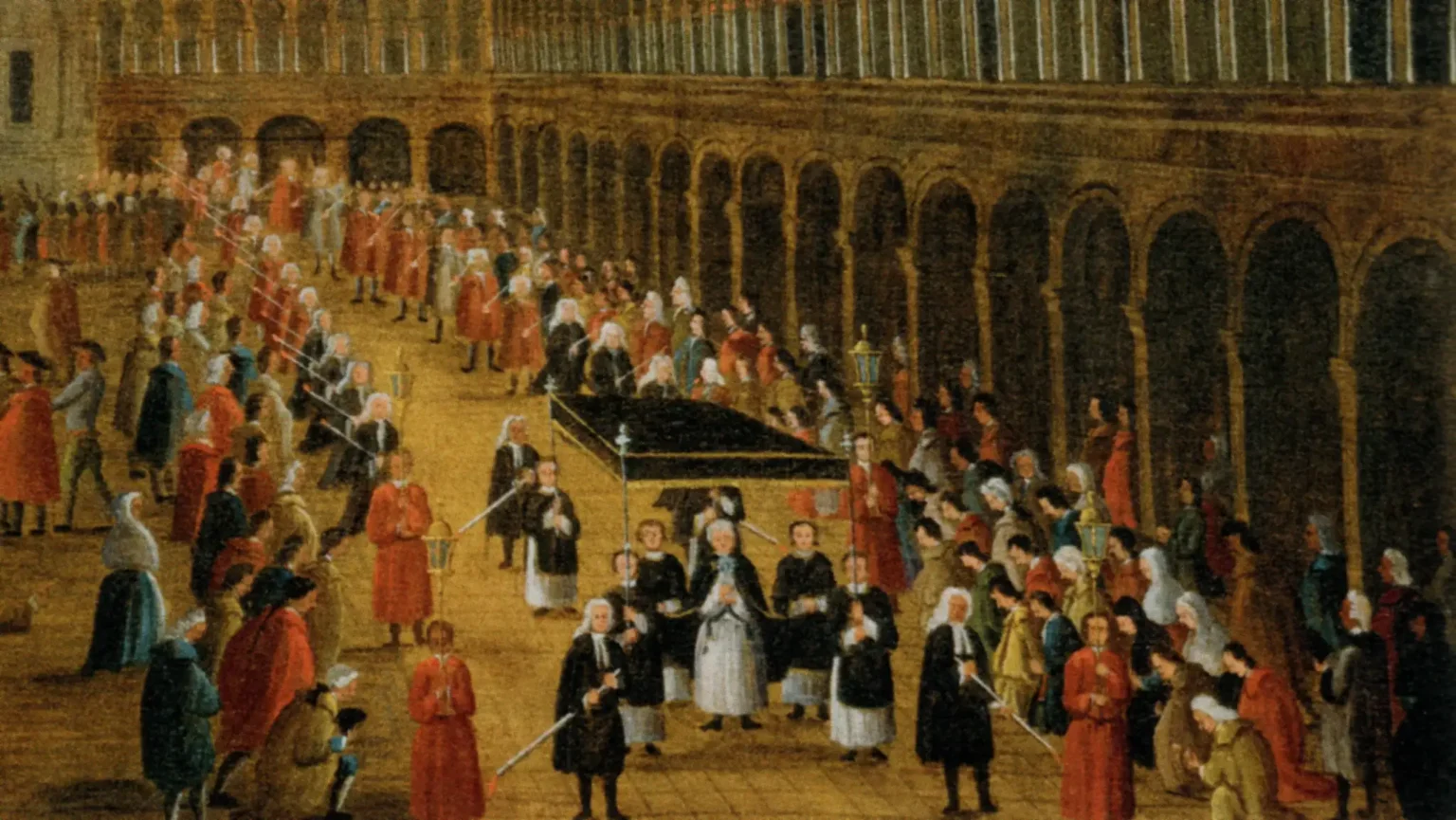
If we have a closer look at the head of the procession, we can see the relic of the miraculous blood. However, the reliquary doesn’t look like the one in St Mark’s basilica, so it is probably the relic from the church of the Frari.
This does make some sense.
While the Scuola della Passione originally had their altar in the church of San Zulian, they soon built a proper seat in the Campo dei Frari, just beside the Frari church.
The relic of the Frari arrived in the late 1400s, and the Scuola della Passione was founded in the early 1500s, so if there wasn’t a connection from the start, it must have formed quite soon.
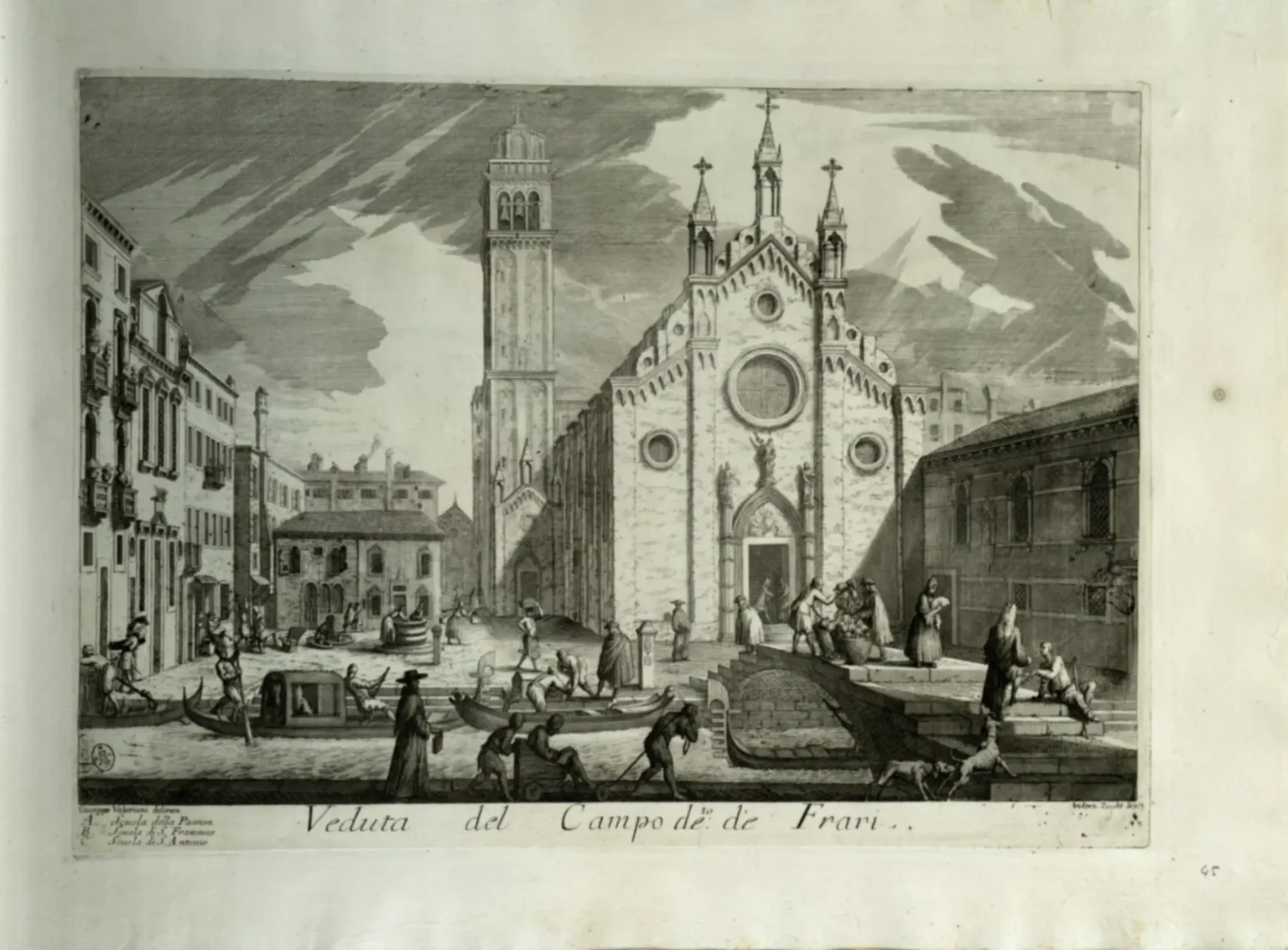
The Campo dei Frari as it appeared in the early 1700s, with the Scuola della Passione on the extreme left.
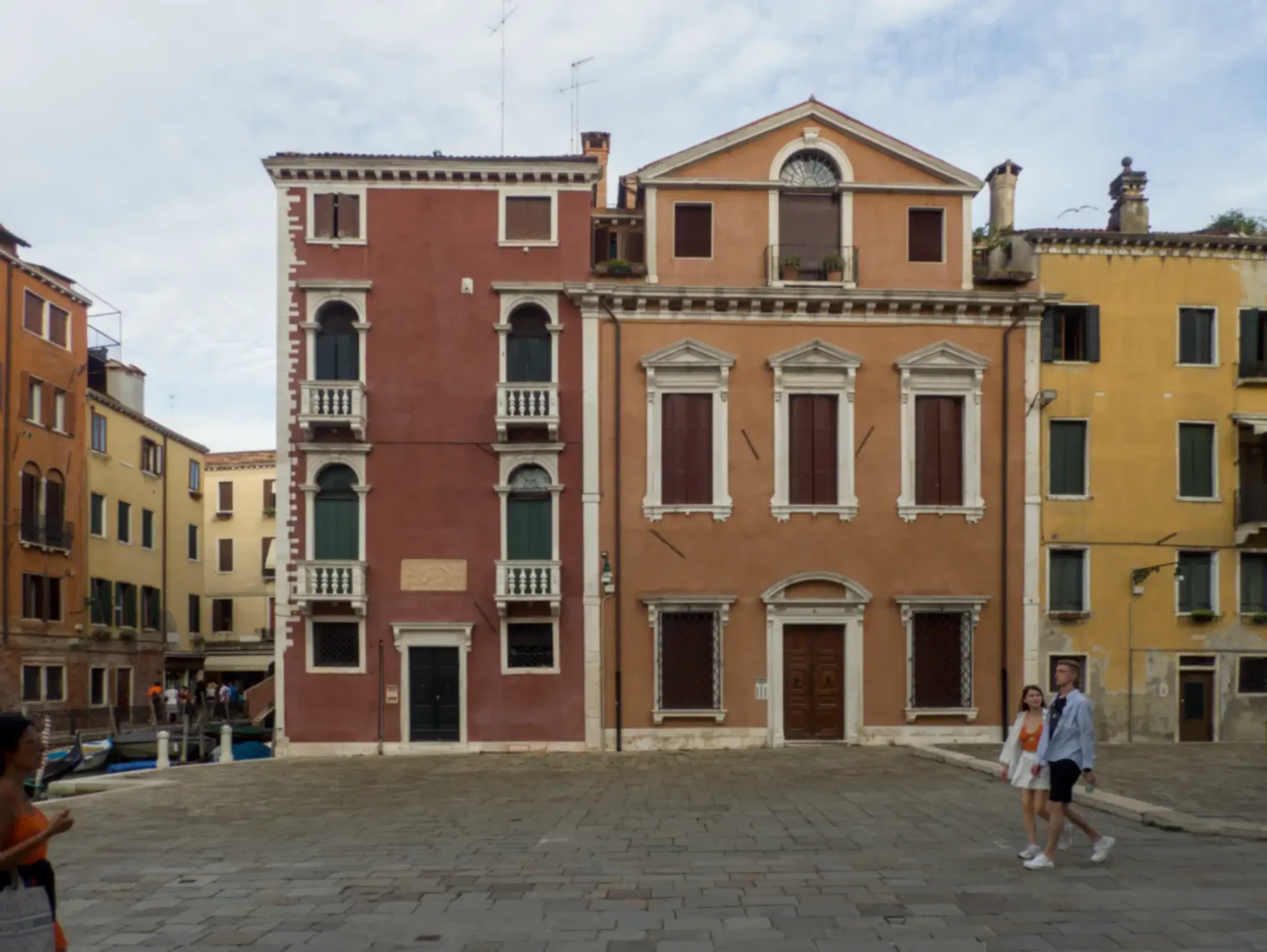
The building of the Scuola della Passione as it appears today. The school was suppressed in 1810, during Napoleon’s rule.
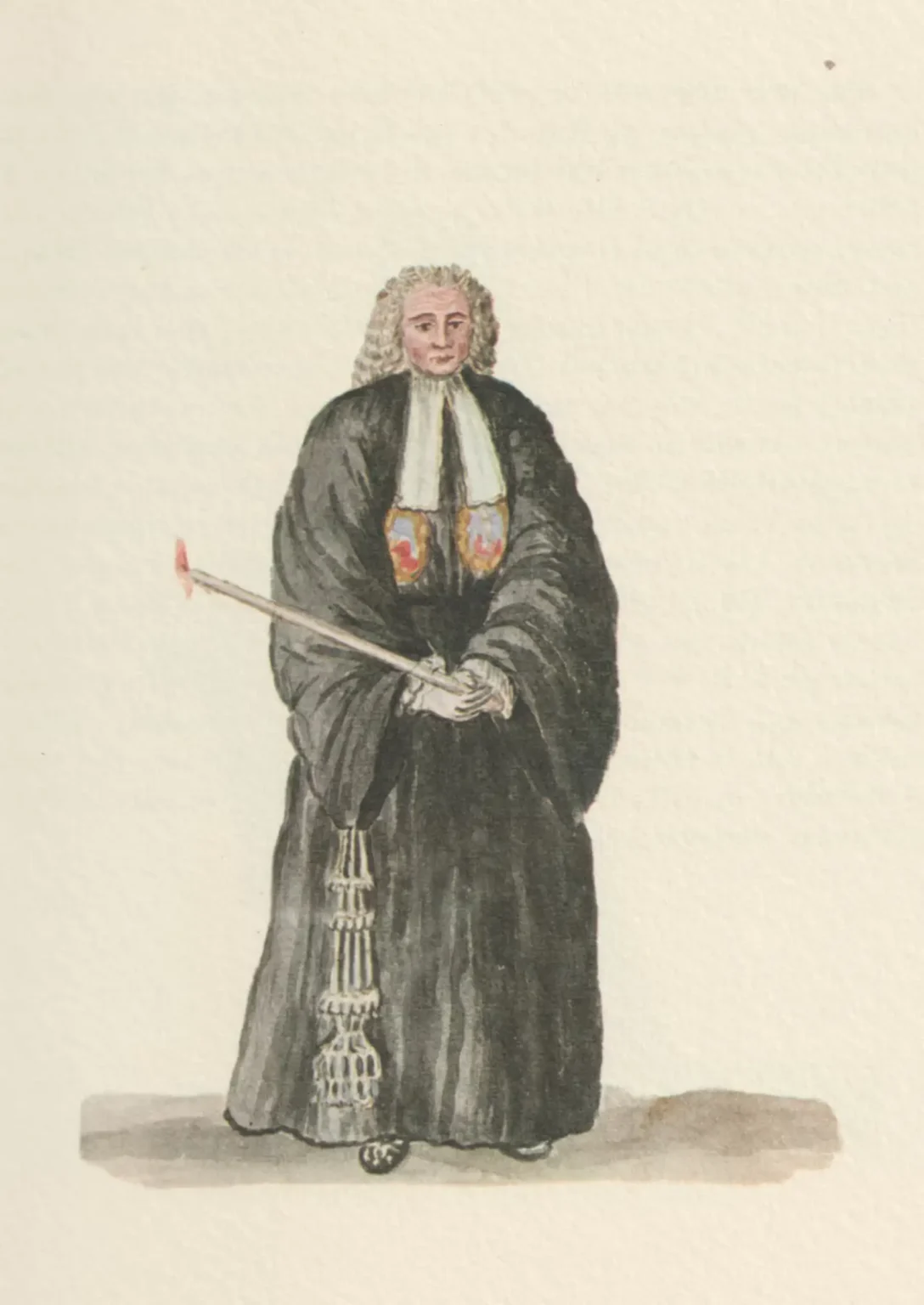
An official of the Scuola della Passione, as depicted by Giovanni Grevembroch (mid-1700s).
Bibliography
- Grevembroch, Giovanni. Gli abiti de veneziani di quasi ogni eta con diligenza raccolti e dipinti nel secolo XVIII, orig. c. 1754. Venezia, Filippi Editore, 1981. [more]
- Lovisa, Domenico. Il Gran teatro di Venezia ovvero descrizzione esatta di cento delle più insigni prospettive, e di altretante celebri pitture della medesima città, il tutto disegnato, e intagliato eccelentemente da periti artefici, con la narrazione della fondazione delle chiese, monasteri, spedali, isolette, e altri luoghi sì pubblici, come privati. Venezia per Domenico Lovisa sotto i portici a Rialto, 1715. [more] 🔗
- Sansovino, Francesco. Venetia citta nobilissima et singolare, descritta in 14. libri da M. Francesco Sansouino. In Venetia appresso Iacomo Sansouino, 1581. 🔗
Leave a Reply