


One of the most common questions I get on my walking tours, is about sewage. Where does it go? Are the canals open sewers? What about Katharine Hepburn?
Now, Venice does have a sewage system, sort of, and it usually works, until it doesn’t.
The reason for this — somewhat shorter — episode, is that for us, last week, it didn’t.
Links
Illustrations
Transcript
Episode 26 — Sewage
We’re going to have an emergency episode about faeces, excrements, dung, shit, and what other euphemism one prefers.
A beloved child has many names, as they say in my native country.
So what happens in Venice, when someone goes to the loo to have a dump?
It mostly depends on the building.
The way of managing sewage has changed over time, and most houses in Venice are centuries old. They are not built to accommodate modern amenities.
All one has to do in Venice, is to look up the buildings, and observe the bundles of wires of all kinds attached to the walls. Telephone lines, optical fibres, electricity mains and what not. Steel tubes, about an inch in diameter, are gas tubes for cooking and heating, with the mains running in the drainage passages under the pavement of the alleyways.
All these things are on the outside because the building has no space inside for them, unlike most modern buildings.
Ancient plumbing
The grand palaces, which line the canals of Venice, was where the wealthy lived.
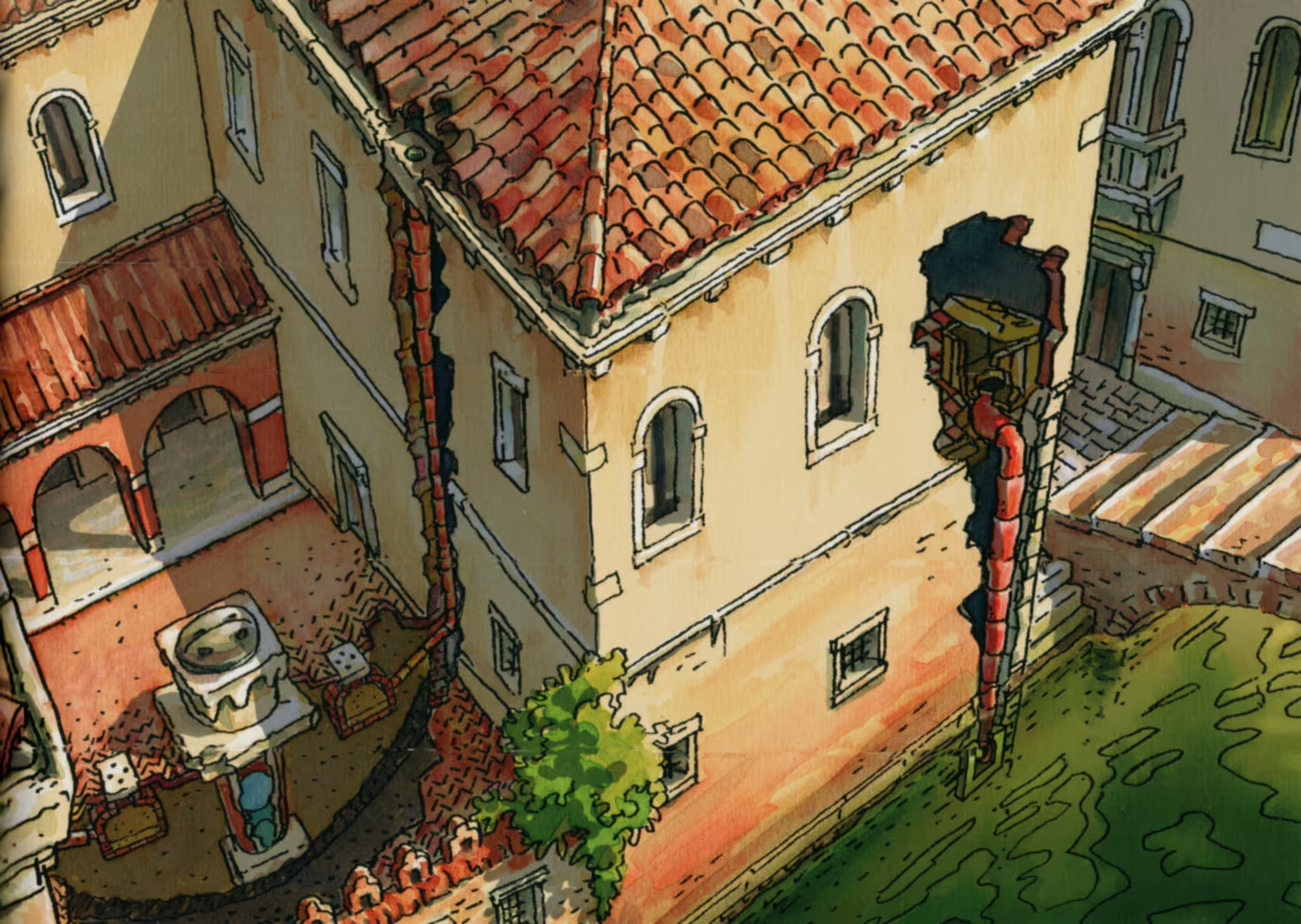
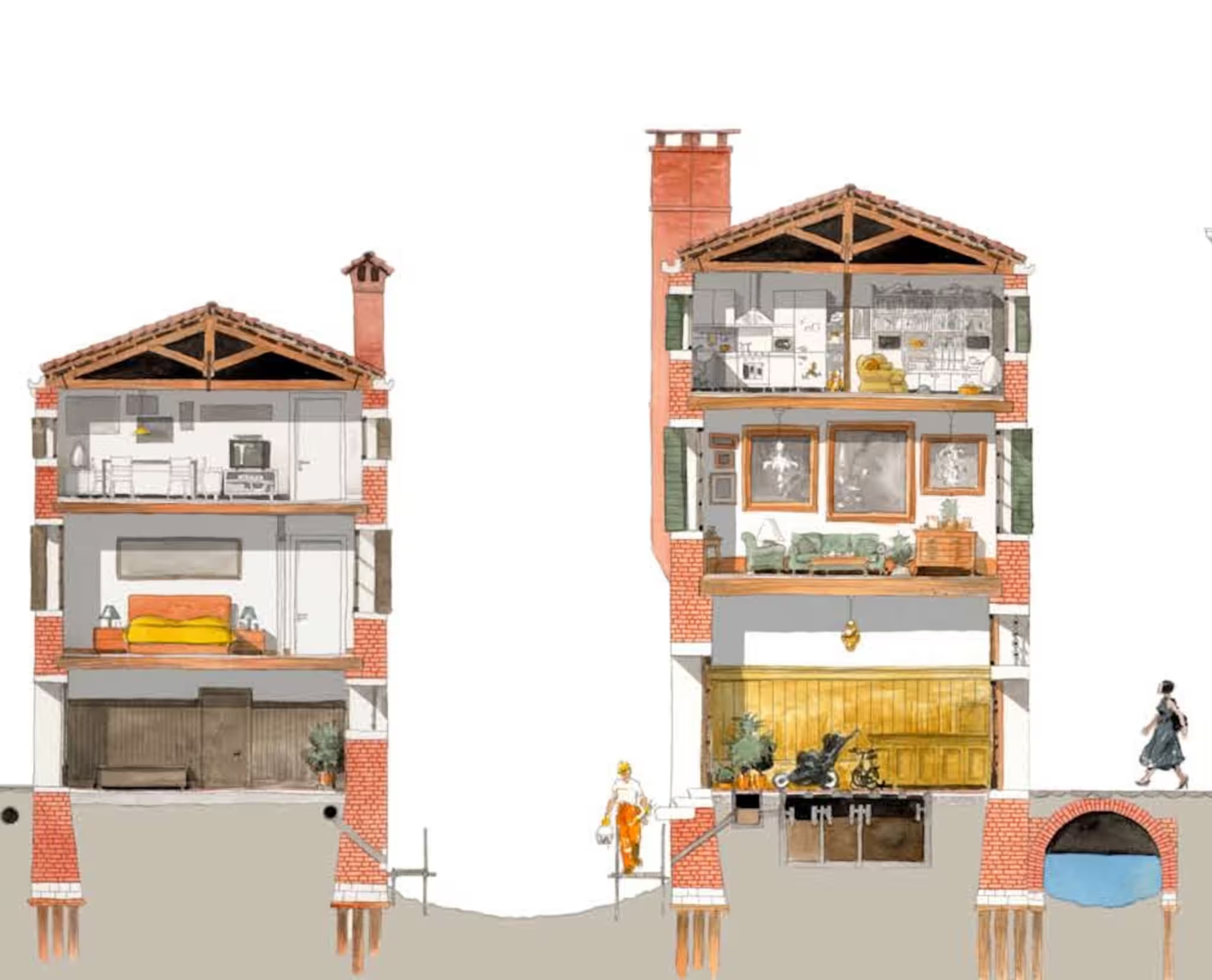
In such buildings, there were, usually in the kitchen area, a brick box with a lid, which was called the necessario — the necessity. This was where people from the building could empty their chamber pot, or simply relieve themselves.
It was also called a comodo because beloved child has many names.
Wastewater from the household, and ashes from the fireplaces, could go down the same way.
There were, generally, no bathrooms in the modern sense of the word, also because there was no running water. Water had to be fetched from the cistern below the courtyard, and carried up in buckets by servants.
Below the necessario a vertical tube, made of pairs of roof tiles, built into the outer wall of the palace, led downwards. Such a passage was a gatolo, which basically means a drainage tube or channel.
Separate, but similar, drainage tubes were also used to channel rainwater from the roof into the cisterns under the courtyard. They were called gatoli too, and so are the drainage channels under the pavement of the alleyways.
Underneath the building, inside the foundations, there was a pit, called the condoto, where everything from the necessario ended up.
Venetian houses are famous for resting on wooden pilings, but those posts are three, four, five meters underground. On top of those, there’s a zatterone — literally a large raft — of thick planks, which form a level base on which the foundation of the building rests.
The brickwork of the buildings therefore extend three, four, five meters underground, and in that space, between the brick foundations, is the pit where sewage was channelled.
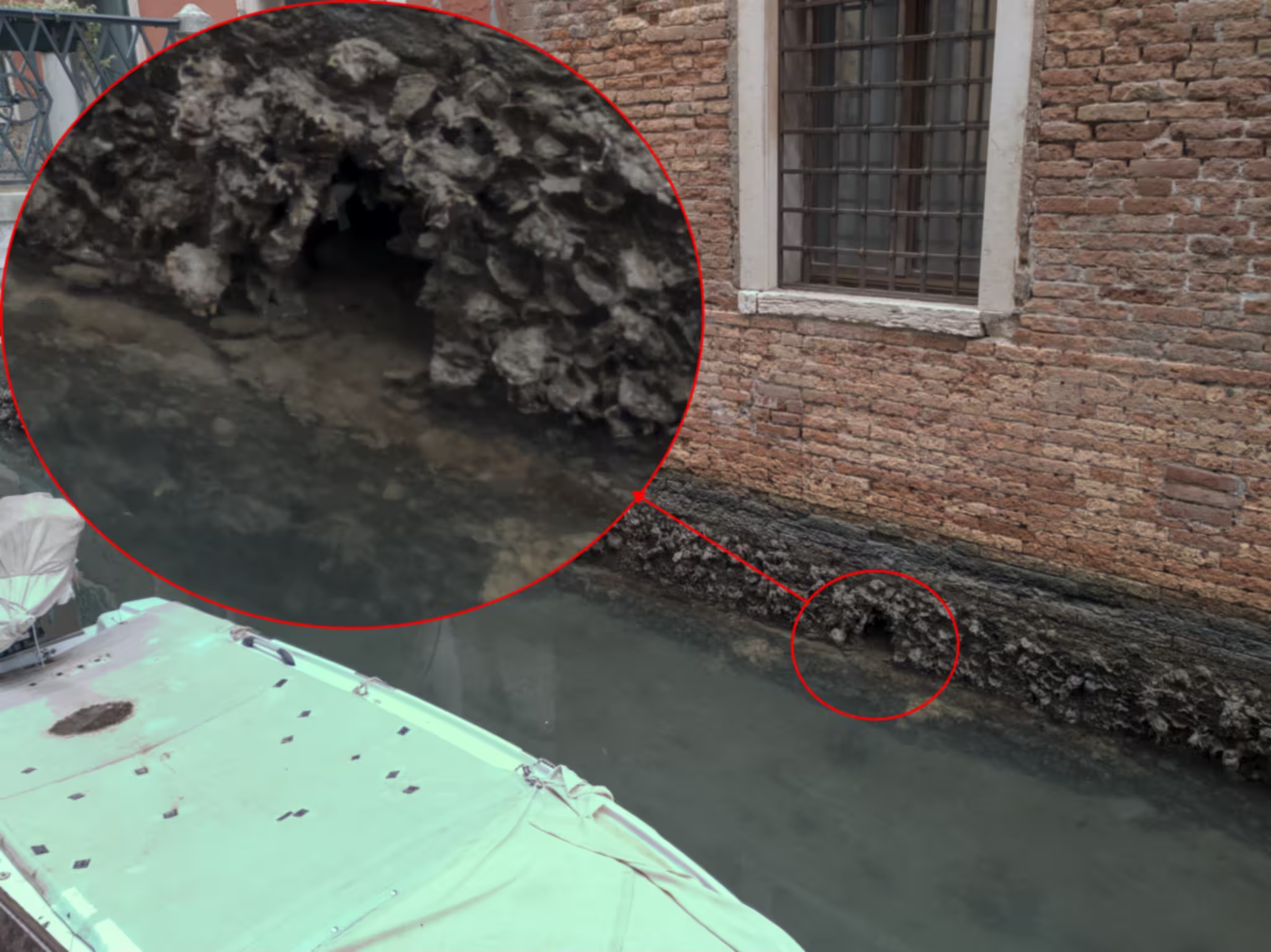
The underground condoto could be connected to a nearby waterway through a passage in the foundation, so excess contents could dissolve and flow out, making the system almost maintenance free.
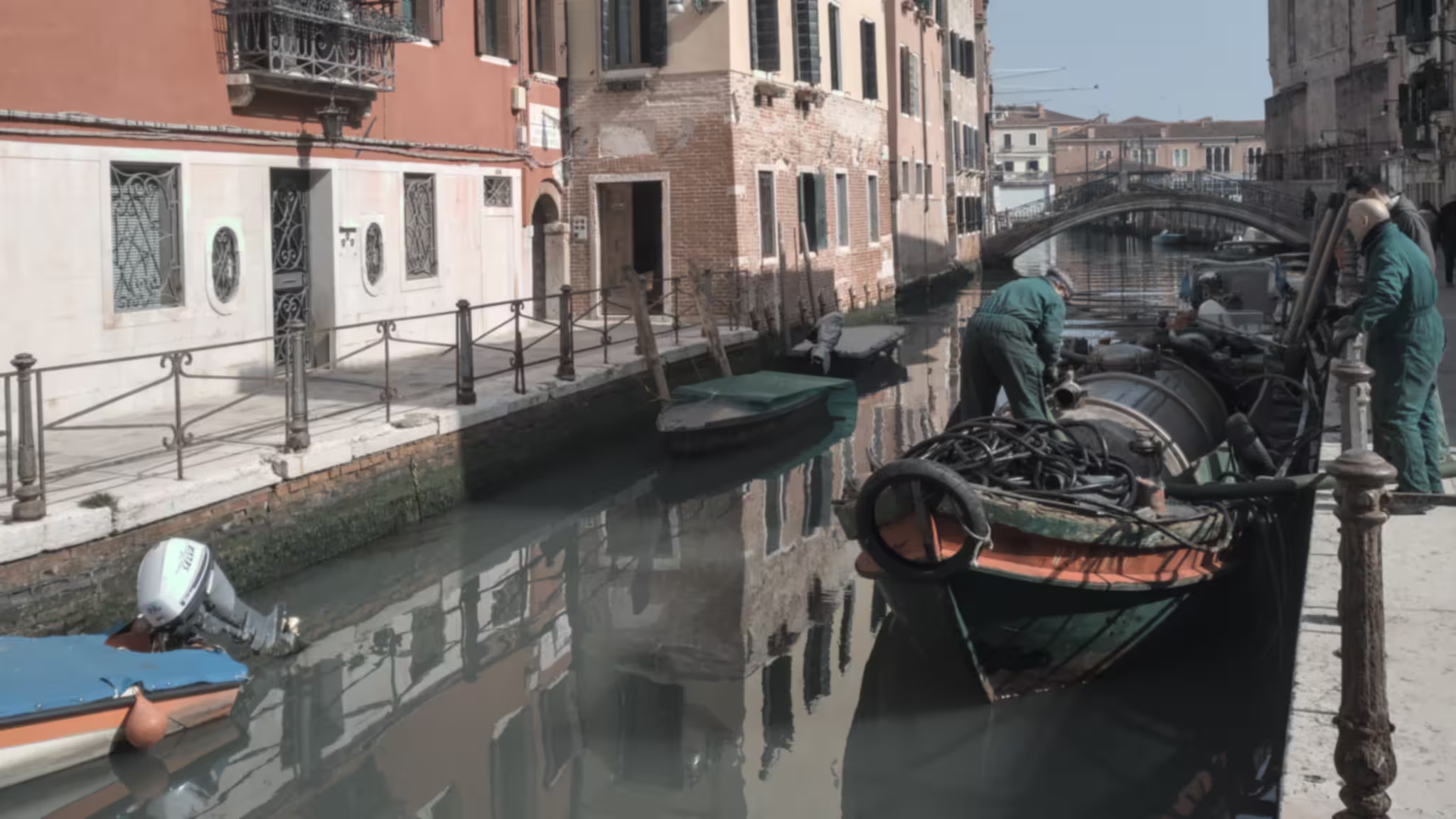
If the passage clogged, or if the condoto ran too full for some other reason, it was necessary to pump out the contents, using long tubes.
Poor people, who lived in those two, three or four storey rental blocks, which are all over Venice, either had an outhouse in the courtyard, or used a chamber pot, which was then emptied into the nearest canal in the morning.
Some were fitted with a condoto later, as it doesn’t have to be made when the house is constructed. By breaking up the floor at the ground level, a condoto can be constructed underneath an existing building.
Canals and the tide
Venice has a substantial tide.
The tidal excursion can be up to one metre and twenty — four feet — which is much more than the Mediterranean has on average.
The tide rises for six hours, and falls for six hours. That is a part of life in Venice, and it is a common saying, with the meaning that things move on in the predestine cycle.
Venice literally flushed using the tidal flow in the canals. What went into the canals, was taken away by the tide, into the much larger lagoon and then the sea.
The Venetians of yore knew this very well, and the republic had a magistracy in charge of everything related to the waters of the lagoon. This was the Magistrato alle Acque — the Magistracy of the Waters.
Nobody was allowed to dig or dredge in the lagoon without permit, and office engineers kept check that the tidal flows in the city didn’t diminish. They literally paid people to sit in boats around the lagoon, to register the tidal flows, to ensure the city was flushed efficiently.
The tide was necessary for public health. Stagnant waters became smelly, and hence pestilential, as discussed in Episode 17 — Venice and the plague – part 1.
What past Venetians knew and understood, the people who govern us today have utterly forgotten, or, more likely, refuse to consider.
A huge canal in the southern lagoon, dug in the 1960s to give modern ships access to the commercial harbour on the mainland at Marghera, has completely messed up the tidal water exchange in the south-western part of Venice. It has also destroyed much of the lagoon south of Venice.
The MOSE project, which does protect Venice from extremely high tides, also limits and modify the tidal currents, which nobody, not even with modern science, fully understands.
Shared infrastructure
In the 1800s, under Austrian and Italian rule, Venice changed a lot.
Something like a quarter — and maybe more — of the canals were filled in.
The authorities learned — the hard way — that they need to leave a sufficient passage under the new road, so the houses, which used to face a canal, can still discharge their excess sewage from the condoti underneath.
On the History Walks Venice website there’s a series of articles about the Strada Nova, which connects the railroad station with the Rialto area. Several canals were filled in to create that road, and there are contemporary photos of the works in those articles.
Such passages — which are now known as the condotto comunale — have been fitted under more and more alleyways. They’re fairly easy to spot because of the large, square manholes at regular distances.
These shared sewage tubes still discharge into the nearby canals.
Black and grey water
In the 1880s, an aqueduct brought fresh water from the Dolomites to Venice, and the rainwater cisterns fell into disuse.
Indoor plumbing, running water and flushing toilets then arrived throughout the 1900s.
Water mains and drains have been fitted as possible in the centuries old houses.
Now, there already were passages, in the gatoli used for sewage and roof drains, but otherwise tubing had to be improvised somehow. Sometimes, such drains are visible on the outside, in the courtyards of the buildings, and sometimes they reuse the ancient gatoli inside the walls.
However, the old pits under the buildings weren’t sufficient for modern water use.
Many houses therefore have separate drains for black and grey water.
Black water is from the toilets, so proper sewage, with the substantial health concerns that entails.
Grey water is from kitchen sinks, showers, dishwashers and washing machines.
Often, the grey water is discharged directly into the canals, sometimes by attaching to the modern roof drains on the outside of the building.
It is therefore not uncommon, if one moves around Venice by boat, to find the canal full of foam or smelling strongly of perfume. All it takes, is somebody putting three times the recommended dose of detergent into a half-empty washing machine.
Today
Modern mass tourism — with the hundreds of thousands visitors Venice can have on any single day of the year — puts quite a load on such an ancient system.
In the 1970s, the Municipality of Venice deliberated that anybody asking for a building permit for just about anything, would be required to modernise the sewage situation of the building.
Such a modernisation implies a modern septic tank, or a chemical tank, neither of which can overflow into the canals. If they run full, they will have to be expunged by one of the many commercial companies providing such services.
This regime has been in place for over half a century, which means that any bar, restaurant, hotel, legal bed-and-breakfast or legal tourist rental will have proper sewage handling, and so will any shop or workplace which has undergone maintenance in the last fifty years.
Most of what remains are probably private flats where some of the few remaining locals live, but many of those are modernised too.
Our case
We thought our home was in such a building.
My wife has a real job, and gets up early to get ready.
Our flat is minuscule, just a kitchen, a bedroom and the toilet. Maybe forty square metres, not much more.
I will therefore either stay in bed until she’s done, or get out real quickly with the dogs, so she can do her morning routine as she pleases.
Last Wednesday, she got up and went to do her routine. A minute later, she came back very agitated.
She dragged me to the bathroom.
When she had flushed the toilet, everything had come up inside the shower.
Not very amusing, unless it happens to others. We weren’t laughing very much.
We cleaned up, and agreed that she would try to get hold of the local plumber during her commute, and I would hold the home front. She left, and I took the dogs out for their morning routine.
When I came back, the shower cabin was full of sewage.
Not dirty water. Sewage. Toilet paper and worse.
It obviously came from upstairs. We’re on the first floor, and there are two other flats above us.
I ran up, knocking on doors, trying to explain that they shouldn’t use their toilets, and then down again to mop it up, before the shower cabin overflowed.
Most of the morning went mopping up shit, and running up and down the stairs, getting the others to understand that they couldn’t use the toilet.
My wife got hold of the plumber. He’s a local guy with a toolbox, she knows him from school — Venice is a small place — but he said it was beyond him. We needed the big guys.
Now at work, but working the phone, she found one of those companies, and got the situation explained. They promised to come by in the afternoon, as it was an emergency.
She left work early. She was too worried to do anything useful.
When she arrived back home, I had carried down five or six buckets of sewage, which I had poured in the drain in the street. What else could I do?
Hours went by, anxiously checking the bathroom for sewage, while trying to get hold of everybody.
Above us lives an elderly lady, who’s assistants had to be notified, and the third floor is rented, so we needed to contact the owner.
On the ground floor there are two storage rooms, and if we had a problem on the first floor, those spaces might be flooded too. In fact, water was seeping out from under one of the doors into the street. As the problem was obviously below first floor level, we had to get in there.
The problem was that they’ve changed owner recently. We had the number for one of them, but he was abroad. For the other, we spent some time locating the previous owner, who lives nearby, got them to call the real estate agency, so they could notify the new owner.
The boat from the sewage company arrived in the afternoon, and wanted to know where the sewage pit was.
We said that as far as we knew, there wasn’t one.
Since my father-in-law bought the flat thirty years ago, there had never been any issues, so we expected the drain to go directly to the condotto comunale, and through that to the canal.
However, once we gained access to the storage room on the ground floor, there was a small manhole, and when they opened it, there was a sea of smelly sludge down there.
The problem was that our drain didn’t seem to go in there.
The workers then made a large hole in our shared entrance, to see if the pit was down there. Nothing, but we have a pile of debris — cement and shattered floor tiles — to dispose of, and a useless hole to fix.
It was already later afternoon. They gave us some hints about how to proceed, and left.
Problem unresolved.
We had dinner at the local osteria, so we could use their toilet. The owner knew exactly how it was because he had been through the same. In fact, as we’ve told the story to others, many have been through this.
This city is part medieval, part early modern, and every modern amenity is just patched on, as best as you can without breaking too much old stuff.
However, we got the problem resolved the next day, and the mystery too.
Another crew from the same company came with a video sonde, and followed the drains from our shower to the toilet, down the tube towards the pit, but then it was blocked.
Somebody had flushed a towel of some kind, which had lodged itself at the elbow-bend at the end of the vertical tube. They pushed it out, and everything worked again.
They flushed some coloured powder down our toilet, and verified the colour emerged in the pit below.
Our house must be from the late 1500s or early 1600s, based on ancient maps. The area was still open marsh in the mid-1500s, but entirely built up in the mid-1600s.
It is a normal, indistinct Venetian building, like thousands others, meant as rental flats for common people. Yet, it does have the gatolo in the wall, and the condoto below, even if it wasn’t a place for the affluent.
We’ve been through the legal papers we have on the flat. There’s no mention of any of all this.
Neither did the new owners of the storage spaces on the ground floor, or the real estate agent, know anything about it. The real estate agent should have checked the property registries before, so supposedly the pit is not in the official documentation.
People, who’ve spent their childhood here, knew nothing of the sewage pit.
We have no idea when the tubes and the pit was established. They could be centuries old, or from the 1900s.
However, before looking into any of this, there were more urgent matters.
Our bathroom has never been this clean.
Everything was hauled out, as it started flooding, and afterwards everything has been disinfected with really nasty chemicals, at least four or five times.
Every time we flush the toilet, we have a quick glance towards the shower cabin, just in case.
Leave a Reply